
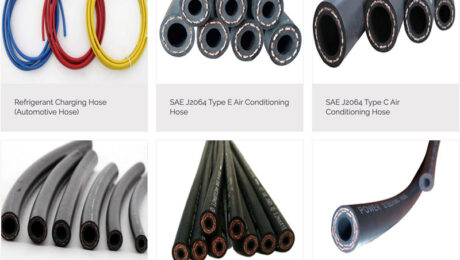
How to Choose the Right Hose for a Camlock Coupling
Tuesday, 15 September 2026
- Published in Blogs
Why Is My Camlock Fitting Leaking? 10 Common Causes and Solutions
Thursday, 03 September 2026
A leaking Camlock fitting can be more than a minor inconvenience. Fluid leakage can cause product loss, equipment contamination, environmental problems, production downtime, and potential safety hazards. Fortunately, many Camlock coupling leaks can be traced to a small number of common causes. The key is to identify where the leakage is occurring and determine whether
- Published in Blogs
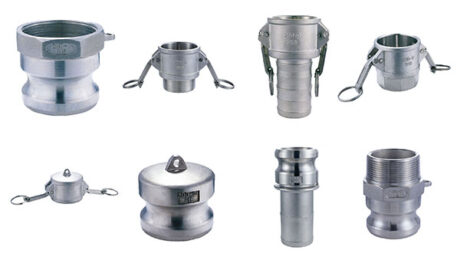
Camlock Fitting Size Guide: How to Choose the Right Size
Friday, 28 August 2026
- Published in Blogs
How to Develop an Internal Training Program for Camlock Safety & Operation
Friday, 10 July 2026
A well-trained team is your best defense against accidents and inefficiency. K&G Machinery provides the blueprint for an effective internal training program. Module 1: Fundamentals: What is a Camlock? Types, materials, components. Module 2: Safety Protocols: Depressurization, PPE, lockout-tagout (LOTO) for couplings. Module 3: Correct Operation: Step-by-step connection/disconnection drills. Module 4: Inspection & Maintenance: How
- Published in Blogs
Sustainability in Fluid Handling: The Environmental Benefits of Durable Camlock Couplings
Thursday, 02 July 2026
Sustainable manufacturing isn’t just about the product—it’s about the entire lifecycle. K&G Machinery’s Camlock couplings support your Environmental, Social, and Governance (ESG) objectives. Durability: Our couplings last for decades, not years, reducing the frequency of manufacturing new products and the associated carbon footprint. Repairability: Unlike disposable products, a K&G coupling is designed to be repaired.
- Published in Blogs
Global Sourcing of Camlock Couplings: Standards, Logistics & K&G’s Network
Friday, 19 June 2026
A global operation needs a supplier who understands world markets. Standards Landscape: North America predominantly uses AAR specifications; Europe and much of the world use ISO 2852. While largely interchangeable, subtle differences exist. K&G Machinery manufactures to both standards, clearly marking our products. Supply Chain Strategy: Sourcing from a low-cost region may save upfront but
- Published in Blogs
How Predictive Maintenance on Camlocks Prevented a Plant Shutdown
Saturday, 06 June 2026
A mid-sized specialty chemical plant adopted a new predictive maintenance (PdM) strategy for its fluid transfer systems, focusing on its hundreds of K&G Camlock couplings. The Process: During a scheduled monthly inspection (following a K&G checklist), a technician found unusual polishing wear on the cam arms of several couplings in a high-pressure solvent loop. While
- Published in Blogs
Inventory Management for Camlock Couplings & Spares: Best Practices Guide
Wednesday, 27 May 2026
Carrying too much inventory ties up capital; carrying too little risks production stoppages. For Camlock couplings, implement these best practices: 1. Standardize: Reduce variety. Limit the types, sizes, and materials used in your plant to a few key K&G models. 2. Criticality Analysis: Classify parts. “Critical” (A-Class): Unique couplings whose failure stops a key process.
- Published in Blogs
The True Cost of a Camlock Coupling: A Total Cost of Ownership (TCO) Analysis
Wednesday, 13 May 2026
The initial purchase price is only a fraction of a coupling’s true cost. Total Cost of Ownership (TCO) includes: 1. Acquisition Price: The invoice cost. 2. Installation Cost: Labor to install and integrate. 3. Operating Cost: Energy losses due to pressure drop, fluid loss from leaks. 4. Maintenance Cost: Cost of inspection, spare parts, and
- Published in Blogs
Sourcing Replacement Parts: The Risks of Generic vs. The Value of K&G OEM Parts
Monday, 04 May 2026
Tempted by a cheaper, generic O-ring or cam arm? It could be a costly mistake. Precision Engineering: K&G OEM parts are manufactured to exacting tolerances. A generic O-ring might have a slightly different cross-section, leading to inadequate compression and leaks. Material Integrity: We certify the chemical composition and grade of our stainless steel, aluminum, and
- Published in Blogs