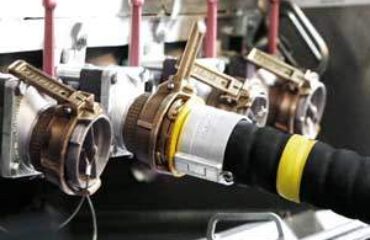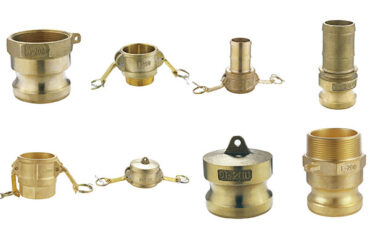
Choosing the correct Camlock fitting size is essential for creating a reliable fluid transfer connection. A fitting that is too small can restrict flow and increase pressure loss, while an incorrectly matched hose and coupling can lead to leakage, poor performance, or premature component failure.
Camlock fittings, also called cam and groove couplings, are commonly available in standard nominal sizes such as 1/2″, 3/4″, 1″, 1-1/4″, 1-1/2″, 2″, 3″, 4″, 5″, and 6″. However, selecting a Camlock fitting is not simply a matter of choosing the same number printed on a hose or pipe.
In this guide, we explain how Camlock fitting sizes work, how to measure a hose correctly, and what you should consider before ordering a Camlock coupling.
What Does Camlock Fitting Size Mean?
The size of a Camlock fitting normally refers to its nominal connection size. For example, a 2-inch Camlock coupling is generally designed for a 2-inch nominal hose or piping system.
However, nominal size does not necessarily equal the actual outside diameter of the fitting, hose, or thread.
For example, a 2-inch hose may have an approximately 2-inch internal diameter while its outside diameter is considerably larger because of the hose wall thickness.
Therefore, when selecting a Camlock coupling, it is important to understand the difference between:
- Nominal size
- Hose inside diameter
- Hose outside diameter
- Thread size
- Actual fitting dimensions
Common Camlock Fitting Sizes
The most common Camlock coupling sizes include:
| Nominal Size | Typical Application |
| 1/2 inch | Small fluid transfer lines |
| 3/4 inch | Water, chemical and utility lines |
| 1 inch | General industrial fluid transfer |
| 1-1/4 inch | Medium-flow applications |
| 1-1/2 inch | Industrial hose systems |
| 2 inch | General-purpose industrial transfer |
| 3 inch | High-flow water, chemical and industrial systems |
| 4 inch | Large-volume fluid transfer |
| 5 inch | Large industrial systems |
| 6 inch | High-volume transfer applications |
The exact available sizes depend on the fitting type, material, manufacturer, and applicable standard.
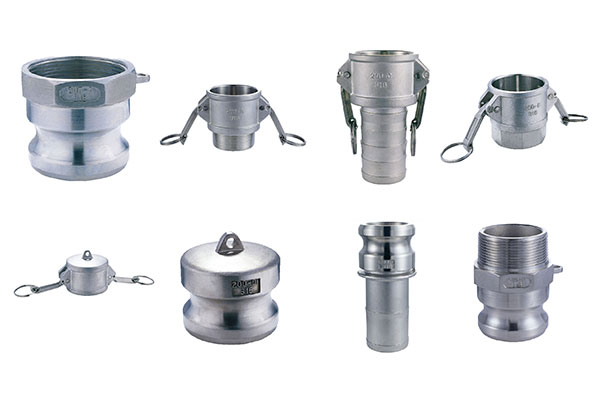
How to Choose the Correct Camlock Fitting Size
- Measure the Hose Inside Diameter
For hose applications, the inside diameter (ID) is one of the most important measurements.
Measure the internal opening of the hose rather than measuring only its outside diameter.
For example:
- Approximately 1-inch ID hose → consider a 1-inch Camlock
- Approximately 2-inch ID hose → consider a 2-inch Camlock
- Approximately 3-inch ID hose → consider a 3-inch Camlock
However, always check the hose manufacturer’s actual dimensions before ordering.
- Check the Hose Outside Diameter
The outside diameter becomes particularly important when selecting the appropriate hose clamp, ferrule, or crimping system.
Two hoses may have the same internal diameter but different wall thicknesses.
For example:
Hose A: 2-inch ID with a relatively thin wall
Hose B: 2-inch ID with a heavy-duty wall
Both may use a 2-inch Camlock connection, but their outside diameters can be different.
This means the fitting size and hose clamp dimensions should be selected independently.
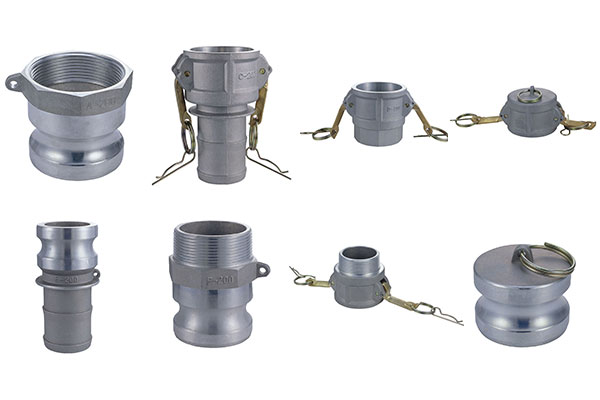
- Consider the Required Flow Rate
Larger Camlock fittings generally provide a larger internal flow path.
If the fitting is significantly smaller than the hose or piping system, it can create a restriction.
This may result in:
- Higher pressure drop
- Reduced flow rate
- Increased turbulence
- Additional pumping requirements
For high-flow applications, engineers should consider the complete flow path rather than selecting a fitting based only on hose size.
- Check the Pipe or Thread Size
If your Camlock fitting connects to a threaded pipe, the nominal pipe size and thread specification must also be confirmed.
Common thread specifications include:
- NPT
- BSP
- BSPT
- JIS
- Other regional or customer-specific thread standards
A fitting with the correct nominal size can still be unsuitable if the thread standard is incorrect.
For example, NPT and BSP threads should not simply be treated as interchangeable.
Camlock Size vs. Hose Size: Are They Always the Same?
In many standard hose assemblies, the Camlock fitting nominal size is selected to correspond to the hose’s nominal internal diameter.
However, this does not mean that every physical dimension will be identical.
Consider a typical hose assembly:
2-inch hose → 2-inch hose shank → 2-inch Camlock adapter → 2-inch Camlock coupler
The nominal sizes are matched, but the actual dimensions of each component can vary.
This is why purchasing decisions should consider the manufacturer’s dimensional drawings and specifications.
How to Measure a Camlock Fitting
If you already have a Camlock fitting and need to identify its size, measure several dimensions.
Measurement 1: Connection Size
Identify the nominal size marked on the product or packaging if available.
Measurement 2: Hose Shank
For hose-tail Camlock fittings, measure the hose connection area and compare it with the hose’s internal diameter.
Measurement 3: Thread
For threaded Camlock fittings, identify:
- Thread type
- Thread diameter
- Thread pitch
- Number of threads per inch where applicable
Do not determine thread compatibility based solely on outside diameter.
Measurement 4: Overall Dimensions
For replacement or OEM applications, compare the complete dimensional drawing.
Important dimensions may include:
- Overall length
- Coupling diameter
- Shank diameter
- Thread dimensions
- Groove dimensions
- Seal dimensions
How Camlock Size Affects Flow
The internal diameter of a coupling can influence system flow.
A smaller flow passage can increase pressure loss, especially when:
- Flow velocity is high
- Fluid viscosity is high
- The hose is long
- Multiple fittings are installed
- The system contains valves or other restrictions
For water-transfer applications, a larger coupling may be appropriate when high flow is required.
For chemical or petroleum transfer, however, flow requirements must be considered together with material compatibility, pressure, temperature, and hose construction.
Choosing Camlock Size for Different Applications
Water Transfer
Common applications include:
- Irrigation
- Construction dewatering
- Water treatment
- Pump connections
- Tank transfer
The primary considerations are hose ID, flow rate, working pressure, and connection compatibility.
Chemical Transfer
Chemical applications require more than simply matching size.
You should also confirm:
- Chemical compatibility
- Temperature
- Pressure
- Seal material
- Hose construction
A correctly sized fitting made from an incompatible material can still fail.
Petroleum and Fuel Transfer
For fuel and petroleum applications, consider:
- Hose size
- Flow requirements
- Material compatibility
- Seal compatibility
- Pressure rating
- Applicable regulations
Agriculture
Agricultural irrigation and spraying systems commonly use quick-connect hose couplings because equipment may need to be connected and disconnected frequently.
Camlock Size Selection Checklist
Before ordering a Camlock coupling, confirm the following:
- Hose inside diameter
- Hose outside diameter
- Required flow rate
- Working pressure
- Operating temperature
- Fluid or media
- Camlock fitting type
- Thread type, if applicable
- Coupling material
- Gasket or O-ring material
- Required dimensional specifications
What If You Cannot Find the Exact Size?
Standard Camlock sizes cover many industrial applications, but some projects require customized solutions.
Depending on the application, manufacturers may provide:
- Special thread configurations
- Custom hose shanks
- Special materials
- Non-standard dimensions
- Custom seals
- OEM configurations
When requesting a quotation, provide the hose size, connection type, fluid, pressure, temperature, and required quantity.
This gives the manufacturer enough information to recommend a suitable configuration.
Frequently Asked Questions
What is the most common Camlock fitting size?
2-inch Camlock couplings are widely used in industrial fluid transfer, water handling, agriculture, and other general-purpose applications. However, the most appropriate size depends on the hose, flow rate, and system requirements.
Is a 2-inch Camlock fitting exactly 2 inches?
Not necessarily. “2 inch” normally refers to the nominal connection size rather than the exact outside diameter of every component.
Should Camlock size match the hose ID?
In a typical hose assembly, the nominal fitting size is generally selected to correspond with the hose’s nominal internal diameter. Always verify the actual dimensions and manufacturer’s specifications.
Does a larger Camlock fitting provide more flow?
A larger coupling can provide a larger flow path, but actual flow depends on the entire system, including hose diameter, length, fluid properties, pressure, valves, and other restrictions.
Can I use different Camlock sizes together?
Standard Camlock couplings are normally designed to connect within compatible nominal sizes and configurations. If different sizes are required, an appropriate reducer, adapter, or custom solution may be necessary.
Conclusion
Selecting the correct Camlock fitting size is an important part of designing a safe and efficient fluid transfer system.
Do not choose a coupling based only on the number printed on the hose. Confirm the hose inside diameter, outside diameter, flow requirements, pressure, temperature, thread configuration, material, and sealing requirements.
For demanding industrial applications, a dimensional drawing and complete product specification should always be checked before installation.