A Camlock coupling is only as reliable as the hose and connection system it is installed with.
Choosing the right hose for a Camlock fitting requires more than matching the nominal size. The hose must also be suitable for the fluid, pressure, temperature, flow rate, flexibility, and operating environment.
A properly selected hose and Camlock coupling work together as a complete hose assembly. An incorrect combination can lead to leakage, hose pull-out, premature wear, or even unexpected system failure.
This guide explains the most important factors to consider when selecting a hose for a Camlock coupling.
What Is a Camlock Hose Assembly?
A typical Camlock hose assembly consists of several components:
Hose → Hose Shank / Tail → Clamp or Ferrule → Camlock Adapter → Camlock Coupler
The Camlock provides the quick connection between the hose assembly and the receiving equipment, pipeline, tank, pump, or another hose.
The hose must be compatible with the Camlock connection and the fluid transfer application.
- Start With the Hose Inside Diameter
The first step is determining the required hose size.
For many standard applications, the nominal Camlock size corresponds to the nominal internal diameter of the hose.
For example:
- 1-inch Camlock → approximately 1-inch nominal hose ID
- 2-inch Camlock → approximately 2-inch nominal hose ID
- 3-inch Camlock → approximately 3-inch nominal hose ID
- 4-inch Camlock → approximately 4-inch nominal hose ID
However, always verify the actual dimensions provided by the hose and fitting manufacturers.
Why Hose ID Matters
The internal diameter influences:
- Flow rate
- Flow velocity
- Pressure drop
- Pump requirements
An undersized hose can restrict flow even when the Camlock coupling itself is correctly selected.
- Match the Hose to the Camlock Connection
Camlock fittings are available with different connection configurations.
Depending on the application, you may use:
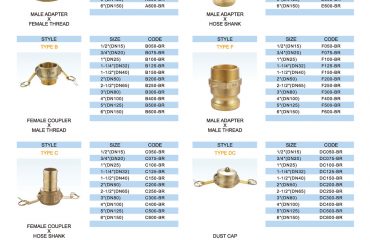
- Hose shank
- Male thread
- Female thread
- Adapter
- Coupler
- Other specialized connection configurations
For hose assemblies, hose-tail or hose-shank Camlock fittings are commonly used.
The shank must be suitable for the hose’s internal diameter and construction.
- Consider the Fluid Being Transferred
The fluid is one of the most important factors in hose selection.
Different hoses are designed for different media.
Examples include:
- Water
- Oil
- Fuel
- Chemicals
- Air
- Food products
- Slurries
- Agricultural liquids
A hose that works well with water may not be suitable for petroleum products or aggressive chemicals.
Chemical Compatibility
Chemical compatibility should be evaluated for the complete assembly:
Fluid + Hose Tube + Hose Cover + Camlock Material + Gasket/O-Ring
Selecting a chemically compatible Camlock while using an incompatible hose does not solve the problem.
Always consult the hose manufacturer’s chemical compatibility information for the specific fluid and concentration.
- Check the Working Pressure
The hose must be able to withstand the system’s operating pressure.
Important values include:
- Maximum working pressure
- Pressure spikes
- Surge pressure
- Vacuum rating where applicable
- Safety factor
Do not select a hose based only on the pressure rating of the Camlock fitting.
The complete hose assembly should be suitable for the application.
Pressure Is Not the Only Consideration
A system may normally operate at a relatively low pressure but experience temporary pressure surges.
These transient conditions should be considered when selecting the hose and coupling.
- Consider Operating Temperature
Temperature can affect both the hose and Camlock components.
Before selecting a hose, determine:
- Minimum operating temperature
- Normal operating temperature
- Maximum operating temperature
- Cleaning temperature
- Ambient temperature
Some hoses may tolerate high temperatures for short periods but have lower recommended continuous operating temperatures.
The hose and Camlock seal should be evaluated together.
- Choose the Right Hose Construction
Industrial hoses can use different construction materials and reinforcement methods.
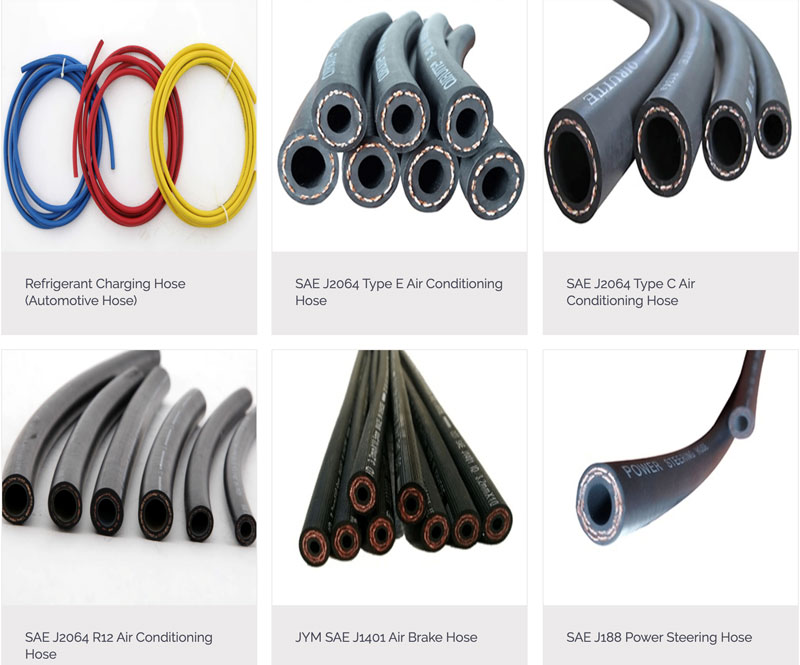
Common hose types include:
Rubber Hose
Rubber hoses are widely used for industrial fluid transfer because of their flexibility and durability.
They are available in different formulations for:
- Water
- Oil
- Fuel
- Chemicals
- Air
- Heavy-duty industrial applications
PVC Hose
PVC hoses are often selected when lightweight construction and economical cost are important.
They are commonly used for:
- Water
- Irrigation
- General fluid transfer
- Agricultural applications
However, temperature and chemical compatibility must be confirmed.
Composite Hose
Composite hoses can be used for certain chemical, petroleum, and specialized transfer applications.
Their suitability depends on the specific construction and fluid.
Food-Grade Hose
For food and beverage applications, the hose must meet the applicable sanitary and regulatory requirements for the intended product.
The Camlock fitting and gasket must also be suitable for the application.
- Consider Hose Flexibility
Flexibility becomes important when the hose must be moved frequently.
For example:
- Tank loading
- Tank unloading
- Pump connections
- Agricultural equipment
- Portable transfer systems
A hose that is too stiff may place additional mechanical stress on the Camlock connection.
On the other hand, a hose that is too flexible for a demanding application may require additional support or reinforcement.
- Avoid Excessive Bending Near the Camlock
The area immediately behind the Camlock fitting can experience significant mechanical stress.
Repeated bending can contribute to:
- Hose fatigue
- Kinking
- Fitting movement
- Hose pull-out
- Premature failure
Where necessary, use appropriate hose supports, strain relief, or protective measures.
The Camlock connection should not carry the weight of a long unsupported hose.
- Check Hose Outside Diameter
While hose ID is important for selecting the nominal Camlock size, hose OD matters when securing the hose to the fitting.
The outside diameter affects:
- Clamp selection
- Ferrule selection
- Crimping
- Hose retention
- Assembly compatibility
Two hoses with the same ID can have different outside diameters because of different wall thicknesses and reinforcement.
Therefore, do not select a clamp based solely on nominal hose size.
- Select the Correct Hose Retention Method
A hose should be securely attached to the Camlock shank.
Depending on the hose and application, the assembly may use:
- Hose clamps
- Heavy-duty clamps
- Ferrules
- Crimped sleeves
- Other engineered retention systems
The appropriate method depends on the hose construction, pressure, application, and manufacturer’s recommendations.
For high-pressure or critical applications, do not assume that a standard hose clamp is sufficient.
Hose and Camlock Compatibility Checklist
Before ordering a Camlock hose assembly, confirm:
- Hose inside diameter
- Hose outside diameter
- Hose construction
- Fluid/media
- Fluid concentration
- Working pressure
- Pressure surges
- Operating temperature
- Required flow rate
- Camlock size
- Camlock material
- Camlock type
- Gasket/O-ring material
- Hose retention method
- Environmental conditions
- Required standards or certifications
Example: Selecting a Camlock Hose for Water Transfer
Suppose a customer needs a hose assembly for water transfer.
The application requires:
- 2-inch nominal hose
- Moderate working pressure
- Frequent connection and disconnection
- Outdoor use
- High flexibility
A suitable selection process would be:
Step 1: Confirm the required 2-inch hose ID.
Step 2: Select a hose designed for water transfer.
Step 3: Verify working pressure.
Step 4: Check minimum and maximum temperature.
Step 5: Select a compatible 2-inch Camlock hose shank.
Step 6: Select an appropriate hose retention method.
Step 7: Confirm the Camlock gasket material.
Step 8: Inspect and pressure-test the completed assembly according to the applicable procedure.
Example: Selecting a Camlock Hose for Chemical Transfer
Chemical applications require more detailed analysis.
You should identify:
- Chemical name
- Concentration
- Temperature
- Pressure
- Flow rate
- Exposure time
- Hose cleaning process
Then verify the compatibility of the complete system.
Do not assume that because a stainless steel Camlock fitting is corrosion-resistant, every hose or gasket will also be compatible with the chemical.
What Happens If the Hose Is Too Small?
An undersized hose can create excessive flow resistance.
Potential effects include:
- Reduced flow
- Increased pressure drop
- Increased velocity
- Additional pump load
- Greater system inefficiency
The correct hose size should therefore be determined from the required flow rate and system design.
What Happens If the Hose Is Too Large?
A larger hose is not automatically better.
An oversized hose can:
- Increase cost
- Increase weight
- Reduce flexibility
- Require larger fittings
- Increase fluid volume inside the system
The hose should be selected based on actual application requirements.
How to Prevent Hose Pull-Out
Hose pull-out is a potentially serious failure mode.
To reduce the risk:
- Use the correct hose size.
- Use a compatible Camlock hose shank.
- Fully insert the hose.
- Use an appropriate retention method.
- Avoid excessive bending near the fitting.
- Support long or heavy hoses.
- Inspect the assembly regularly.
- Replace damaged or aged hose.
If the application involves high pressure, vibration, movement, or hazardous media, the hose assembly should be evaluated by a qualified professional.
When Should the Hose Be Replaced?
There is no universal replacement interval for every hose.
Inspect the hose for:
- Cracks
- Cuts
- Abrasion
- Bulging
- Soft spots
- Hardening
- Chemical swelling
- Leakage
- Exposed reinforcement
- Deformation near the fitting
If significant deterioration is detected, remove the hose from service.
Camlock Coupling and Hose: Think of Them as One System
The most important principle is that the Camlock and hose should not be selected independently.
The complete assembly must be evaluated for:
Size + Fluid + Pressure + Temperature + Flow + Material + Seal + Mechanical Loads
A high-quality Camlock coupling cannot compensate for an unsuitable hose.
Likewise, an excellent industrial hose can still fail if it is connected to an incompatible fitting or improperly secured.
Frequently Asked Questions
What type of hose is used with a Camlock fitting?
Camlock fittings can be assembled with many types of industrial hoses, including rubber, PVC, composite, chemical, water, petroleum, and other specialized hoses. The correct hose depends on the application.
Does the hose size have to match the Camlock size?
For many standard hose assemblies, the nominal hose ID and Camlock size are selected to correspond. However, actual dimensions and assembly requirements must always be verified.
Can I use a Camlock fitting with a PVC hose?
Yes, Camlock fittings can be used with suitable PVC hoses. The hose pressure, temperature, chemical compatibility, and connection method must be checked first.
How do I stop a Camlock hose from pulling out?
Use the correct hose size and shank, fully insert the hose, use an appropriate retention method, and prevent excessive bending or mechanical loading near the connection.
What is the best hose for a Camlock fitting?
There is no single “best” hose. The correct hose depends on the fluid, pressure, temperature, flow rate, flexibility, environment, and applicable standards.
Conclusion
Choosing the right hose for a Camlock coupling is just as important as choosing the correct fitting.
Start with the hose ID and required flow rate, then evaluate the fluid, pressure, temperature, hose construction, flexibility, outside diameter, and retention method.
For demanding applications, the hose, Camlock fitting, and gasket should be treated as one complete engineered assembly.
If you are unsure which hose and Camlock configuration is appropriate, provide your hose size, fluid, pressure, temperature, and application conditions to a qualified Camlock coupling manufacturer for technical assistance.